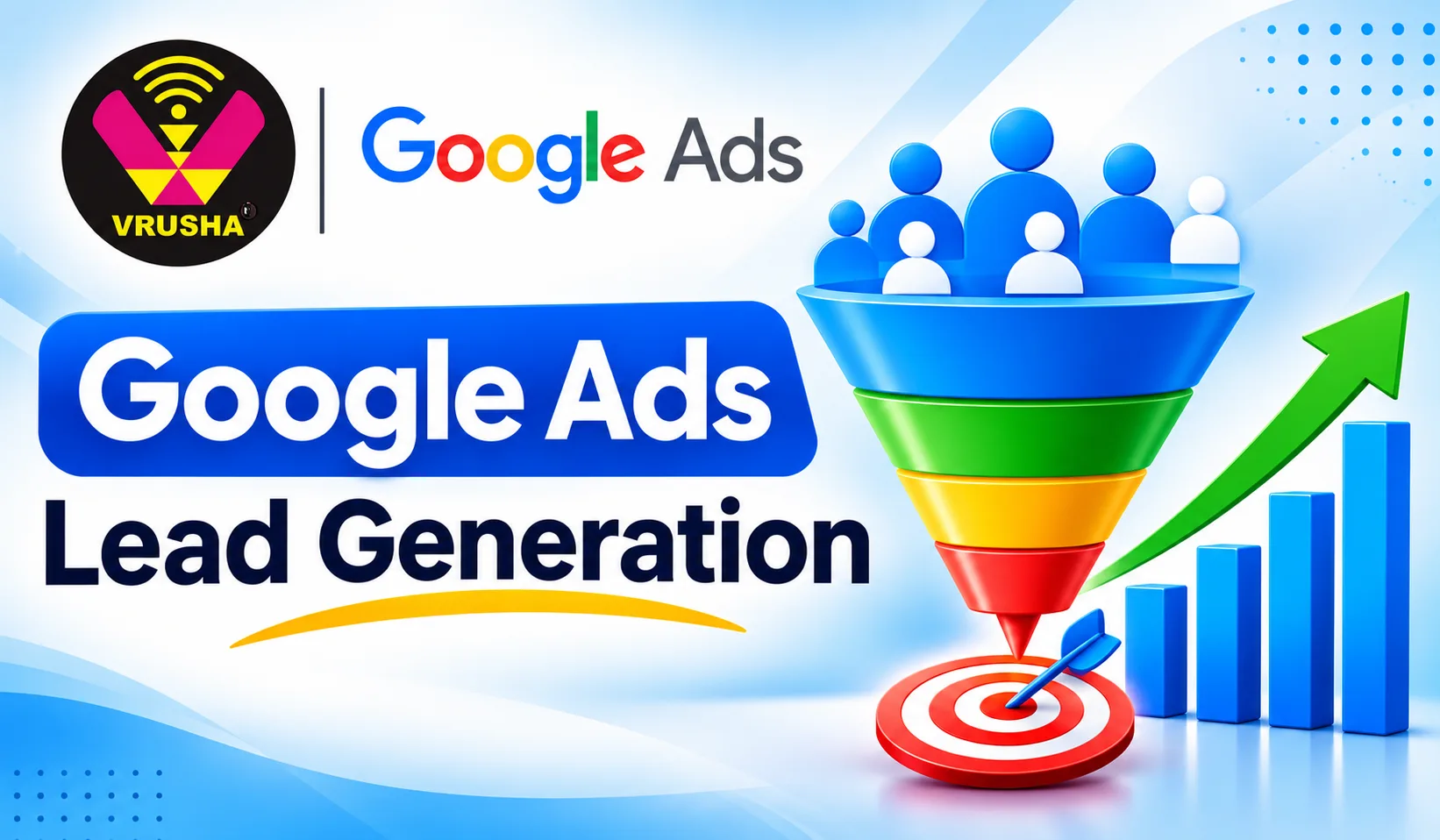
In today's competitive digital marketplace, attracting potential customers is only the first step towards business growth. Companies need a reliable way to connect with people who are actively searching for their products or services, encourage them to take action and turn their interest into genuine business opportunities.
This is where Google Ads lead generation becomes an important part of a digital marketing strategy.
Google Ads allows businesses to reach potential customers when they search for relevant products, services or solutions. Instead of depending entirely on organic visibility or traditional promotional methods, businesses can use paid advertising to reach relevant audiences, generate enquiries and create opportunities for sales.
However, running advertisements does not automatically guarantee quality leads. A successful campaign requires relevant keyword research, appropriate audience targeting, compelling advertisements, well-designed landing pages, accurate conversion tracking and continuous optimisation.
At Vrusha Online, we understand that effective digital advertising should support real business objectives. Generating hundreds of clicks is not enough if those visitors do not become potential customers. The focus should be on attracting relevant prospects, understanding their requirements and creating a smooth journey from the first advertisement interaction to the final enquiry.
Whether you operate a startup, a local service business, an e-commerce company, an educational institution or an established organisation, Google Ads can help you connect with customers who are already interested in what you offer.
In this comprehensive guide, we explain how Google Ads lead generation works, the strategies businesses should follow, how to improve lead quality, common advertising mistakes, budget planning, performance measurement and practical ways to build campaigns that support sustainable business growth.
What Is Google Ads Lead Generation?
Google Ads lead generation is the process of using Google's paid advertising platform to attract potential customers and encourage them to share their contact information or express interest in a product or service.
A lead is a person or organisation that has shown interest in a business offering. This interest may be expressed through an enquiry form, telephone call, appointment request, quotation request, consultation booking or another meaningful action.
For example, consider a person searching for "website development company near me". A website development agency can display a relevant Google Search advertisement to reach that potential customer.
When the person clicks the advertisement, they can visit a dedicated service page, understand the company's offering and submit an enquiry form.
This interaction creates a potential business opportunity.
The process generally follows five stages:
Reach: Display relevant advertisements to potential customers.
Attract: Encourage interested users to click through an advertisement.
Engage: Provide useful information through a landing page or website.
Convert: Encourage visitors to submit an enquiry, call or book an appointment.
Nurture: Follow up with leads and move suitable prospects towards a purchase.
The objective is not simply to increase website traffic. It is to attract people whose requirements match the products or services offered by the business.
How Google Ads Helps Generate Business Enquiries
Google Ads provides advertising opportunities across Google's search results and other eligible advertising channels.
Businesses can create campaigns based on their objectives, available budgets, products, services and target audiences.
For example:
A real estate consultant can generate enquiries from people searching for residential properties.
A healthcare clinic can promote appointments for relevant medical services.
A software development company can attract businesses looking for technical solutions.
An educational institution can generate admission enquiries.
An e-commerce business can encourage customers to explore products and make purchases.
Each campaign should be structured around the intended customer action.
When advertising messages, keywords and landing pages are aligned, potential customers can understand the offering more easily and take the next step.
Why Is Google Ads Lead Generation Important for Businesses?
Customer acquisition is an important part of business development. Companies need a consistent way to introduce their services, attract potential buyers and create sales opportunities.
Google Ads supports this process by connecting businesses with people searching for relevant solutions.
1. Reach Customers with Purchase Intent
One of the biggest advantages of Search advertising is the opportunity to connect with people who are actively looking for a particular service or product.
Consider the difference between someone searching for "what is website development" and someone searching for "hire website development company".
The first search may indicate an informational requirement. The second suggests a stronger commercial intention.
By identifying relevant search terms, businesses can create advertisements that address customer requirements at different stages of the buying journey.
This helps businesses use their advertising budgets more strategically.
2. Increase Online Visibility
A business may offer excellent services but still struggle to attract customers if its website does not appear prominently in relevant search results.
Google Ads provides an opportunity to gain paid visibility for eligible searches.
This can be especially useful for new businesses, companies launching additional services and organisations entering competitive markets.
Paid advertising can complement SEO by helping businesses reach potential customers while their organic search visibility develops.
3. Generate Enquiries More Quickly
Unlike organic search optimisation, which generally requires time to develop rankings and traffic, eligible Google Ads campaigns can begin receiving impressions and clicks after launch.
However, meaningful enquiries depend on search demand, advertising competition, campaign quality, landing pages and customer behaviour.
Businesses should therefore evaluate the time required to generate reliable results rather than assuming that campaign activation guarantees immediate sales.
4. Control Advertising Budgets
Google Ads provides campaign budget and bidding controls that allow businesses to manage their advertising investment.
Companies can allocate budgets according to their priorities, review expenditure and make adjustments as performance information becomes available.
For example, a local service provider may prioritise a few high-intent services rather than promoting every service equally.
This approach can help direct spending towards the opportunities most relevant to business goals.
5. Measure Advertising Performance
Google Ads provides reporting information about impressions, clicks, conversions and advertising costs.
When conversion tracking is configured correctly, businesses can understand which campaigns contribute to important customer actions.
This makes it easier to identify areas that need improvement and evaluate whether advertising expenditure is supporting business objectives.
6. Reach Customers Across Different Locations
Businesses can use geographic targeting to reach potential customers in selected service areas.
A company operating in Bangalore may target customers across the city, while a local business may focus on specific neighbourhoods.
Organisations serving multiple cities can create separate campaigns or targeting structures based on their operational requirements.
Location targeting should always reflect where the business can genuinely provide its products or services.
How Does Google Ads Lead Generation Work?
Understanding the complete advertising process helps businesses build campaigns that produce more meaningful results.
Google Ads lead generation involves multiple connected activities. Each stage contributes to the customer's experience and the overall campaign outcome.
Step 1: Identify the Target Audience
Before launching an advertisement, businesses must understand who their potential customers are.
Audience research involves identifying customer requirements, purchasing behaviour, common problems, location preferences and decision-making factors.
For example, a company offering business software may target business owners, managers and organisations looking for operational solutions.
A local home maintenance business may focus on residents searching for immediate assistance.
The audience definition should influence keyword selection, advertising messages and landing page content.
Step 2: Conduct Keyword Research
Keyword research identifies the words and phrases people use when searching for relevant products and services.
For a business providing Google Ads services, potential keywords may include:
Google Ads lead generation.
Google Ads management services.
PPC lead generation services.
Google Ads campaign management.
Lead generation through Google Ads.
Google Ads agency.
Paid advertising services.
Google Ads expert.
However, every related keyword may not have the same commercial value.
Some searches indicate that users are researching advertising concepts, while others suggest they are evaluating agencies or preparing to purchase a service.
Businesses should organise keywords according to search intent and campaign objectives.
Step 3: Create Relevant Google Ads Campaigns
After keyword research, the next stage is campaign planning.
A campaign can be organised according to service categories, customer locations, product groups or advertising objectives.
For example, a digital marketing company may create separate campaign groups for:
Google Ads management.
SEO services.
Social media advertising.
Lead generation services.
Landing page development.
This structure helps maintain relevance between keywords, advertisements and landing pages.
Step 4: Develop Compelling Advertisements
An advertisement should clearly communicate what the business offers and why a potential customer should take action.
Effective advertising messages generally include the service, a relevant benefit and a clear call to action.
For example:
Headline: Professional Google Ads Management
Description: Reach relevant customers through strategically planned PPC campaigns. Enquire about advertising solutions for your business.
The advertisement should not make unsupported claims or promise guaranteed sales.
Clear, accurate messaging helps attract visitors who understand the offering.
Step 5: Direct Visitors to a Landing Page
When someone clicks an advertisement, they should arrive at a page that closely matches the advertised service.
A landing page should explain the offering, answer important questions and make the next action straightforward.
For example, an advertisement promoting digital marketing services should direct visitors to a relevant digital marketing page rather than an unrelated website section.
The landing page should include:
A clear headline.
Relevant service information.
Business benefits.
Supporting information.
Contact details.
A visible enquiry form.
A clear call to action.
Step 6: Capture Potential Leads
Once visitors understand the service, they should have a convenient way to contact the business.
Common lead capture methods include:
Website enquiry forms.
Telephone calls.
Appointment booking forms.
Consultation requests.
Quotation forms.
Eligible Google Ads lead form assets.
The information requested should be relevant to the sales process.
A simple form that collects essential details can make it easier for interested visitors to complete an enquiry.
Step 7: Track and Evaluate Conversions
Conversion tracking helps businesses understand which advertising interactions result in valuable actions.
For example, a completed enquiry form can be recorded as a conversion.
A business may also track qualified calls, purchases, appointment bookings or other relevant actions.
The tracking setup should be tested to avoid duplicate conversions and inaccurate reporting.
Step 8: Follow Up with Leads
Generating an enquiry is not the end of the customer journey.
Businesses must respond promptly, understand the prospect's requirements and provide relevant information.
A well-organised follow-up process helps sales teams identify suitable opportunities and move interested prospects towards a purchase.
Different Types of Google Ads Campaigns for Lead Generation
Google provides different advertising formats that businesses can use to attract potential customers.
The most appropriate campaign type depends on the business model, audience, advertising objectives and available resources.
1. Google Search Ads
Search campaigns are among the most commonly used formats for lead generation.
They allow businesses to display advertisements when users search for relevant products or services.
For example, a person searching for "digital marketing agency in Bangalore" may see advertisements from companies offering digital marketing services.
Search campaigns can be useful for:
Professional service providers.
Healthcare businesses.
Educational institutions.
Real estate companies.
B2B organisations.
Local service providers.
The effectiveness of Search advertising depends on keyword relevance, advertisement quality, bidding, competition and landing page experience.
2. Google Display Ads
Display advertising allows businesses to reach audiences across eligible websites and applications.
These advertisements generally use visual creative assets such as banners and images.
Display campaigns can support brand awareness, remarketing and audience engagement.
For example, a business may use display advertisements to introduce a new service to relevant audiences or reconnect with eligible previous website visitors.
Display advertising should be evaluated carefully because impressions and clicks do not automatically represent genuine buying interest.
3. Performance Max Campaigns
Performance Max is a goal-based campaign type that uses automation to access multiple eligible Google advertising channels.
It can help advertisers reach potential customers across Search, YouTube, Display, Discover, Gmail and Maps, subject to campaign eligibility and available inventory.
For lead generation, businesses should provide accurate conversion goals, suitable creative assets and relevant audience information.
Performance Max should not be treated as a replacement for strategy or measurement.
Businesses must evaluate lead quality, conversion values and actual business outcomes when assessing performance.
4. YouTube Video Campaigns
YouTube advertising provides an opportunity to communicate through video.
Businesses can use video advertisements to introduce services, demonstrate products, explain solutions or build brand familiarity.
For example, an educational institution can present its courses, facilities and admission process through a short video.
A real estate company can showcase property features and invite interested viewers to request further information.
Effective video advertising requires clear messaging, relevant audiences and a suitable next action.
5. Google Shopping Ads
Shopping campaigns are especially relevant to e-commerce businesses selling physical products.
They can display product images, prices and retailer information through eligible shopping placements.
Although Shopping campaigns primarily support product discovery and sales, they can also contribute to customer acquisition.
Retailers should maintain accurate product feeds, descriptions, pricing and availability information.
6. Google Lead Form Assets
Google Ads lead form assets allow eligible advertisers to collect customer information directly through an advertisement experience.
This can reduce the number of steps a potential customer needs to complete before submitting an enquiry.
Lead forms should request relevant information and clearly explain what happens after submission.
Businesses must also manage incoming leads responsibly and provide appropriate privacy information.
Google's lead form asset best practices provide additional guidance.
Essential Google Ads Lead Generation Strategies
A successful campaign requires more than selecting keywords and writing advertisements.
Businesses should develop a complete strategy that considers customer intent, campaign structure, advertising content, landing pages and follow-up processes.
1. Focus on High-Intent Keywords
High-intent keywords are searches that indicate a stronger likelihood of commercial interest.
For example:
Hire digital marketing agency.
Google Ads management company.
Request website development quotation.
Book a consultation with a business consultant.
PPC lead generation services.
These searches can be valuable because users may already be evaluating service providers.
However, keyword intent must be considered alongside actual business relevance and search term performance.
2. Organise Campaigns by Service Category
Avoid placing every service-related keyword into a single campaign structure.
A business offering multiple services can organise campaigns according to customer requirements.
For example, a digital marketing company can separate Google Ads management, SEO, social media advertising and lead generation services.
This makes it easier to create relevant advertisements and send visitors to appropriate landing pages.
3. Use Negative Keywords
Negative keywords help prevent advertisements from appearing for searches that are not relevant to the business.
For example, a company offering paid professional services may wish to exclude searches focused on unrelated jobs, free courses or irrelevant training materials.
Search term reports should be reviewed regularly to identify unnecessary traffic.
Negative keywords should be selected carefully because excluding a relevant search can also reduce potential customer opportunities.
4. Create Strong Calls to Action
A call to action tells potential customers what to do next.
Examples include:
Request a Free Consultation.
Get a Business Quote.
Book an Appointment.
Contact Our Team.
Explore Our Services.
Request More Information.
The CTA should match the customer's stage in the buying journey.
A person researching a service may prefer to explore details before making a purchase, while a person comparing providers may be ready to request a quotation.
5. Optimise Landing Pages for Conversions
A landing page plays an important role in converting advertising traffic into enquiries.
It should immediately communicate the advertised service and make it easy for visitors to take action.
Important optimisation areas include page speed, mobile usability, headline clarity, form placement, service information and contact visibility.
Avoid unnecessary distractions that prevent visitors from completing the intended action.
6. Implement Accurate Conversion Tracking
Conversion tracking provides the information required to evaluate campaign performance.
Businesses should track actions that reflect actual commercial value rather than counting every website interaction as a lead.
For example, a page view should not automatically be treated as a qualified enquiry.
Relevant conversion actions may include completed forms, qualified calls, booked appointments and completed purchases.
7. Improve Lead Quality with Qualification Questions
Not every enquiry is suitable for the business.
A company offering enterprise software may need information about organisation size, business requirements and implementation timelines.
A home renovation company may need details about the property location, project type and expected timeframe.
Simple qualification questions can help sales teams understand whether an enquiry is relevant.
The form should remain convenient and avoid requesting unnecessary personal information.
8. Use Remarketing Strategically
Some potential customers may visit a website without submitting an enquiry.
They may want to compare providers, review pricing or discuss the service internally.
Remarketing can help eligible businesses reconnect with previous visitors through relevant advertisements, subject to platform policies and applicable privacy requirements.
For example, a business may show a relevant service reminder to eligible users who previously visited a particular service page.
The messaging should offer useful information rather than repeatedly showing the same advertisement.
9. Connect Google Ads with CRM Systems
A Customer Relationship Management system helps businesses organise enquiries and monitor their progress.
Integrating advertising and CRM data can provide greater visibility into the customer journey.
Businesses can track which enquiries become qualified prospects, which opportunities progress towards sales and which campaigns generate valuable customers.
This is particularly useful for organisations with longer sales cycles.
10. Optimise for Qualified Leads Instead of Lead Volume
A campaign that generates many irrelevant enquiries may not contribute meaningfully to revenue.
Businesses should evaluate whether the leads match their target audience, service requirements and purchasing capacity.
Where suitable tracking data is available, qualified or converted leads can be used to inform campaign optimisation.
This approach encourages a stronger connection between advertising performance and business outcomes.
How to Build a High-Converting Google Ads Landing Page
A landing page is one of the most important components of a lead generation campaign.
Even a well-targeted advertisement can produce poor results if the destination page does not meet customer expectations.
Create a Clear and Relevant Headline
The headline should communicate the service being promoted.
For example, a page advertising business website development should clearly mention website development rather than using a vague statement such as "Transform Your Future".
A relevant headline helps visitors confirm that they have reached the correct destination.
Explain the Business Value
Visitors should understand what the business provides and how the service addresses their requirements.
Use clear descriptions, relevant benefits and useful supporting information.
Avoid exaggerated claims or technical language that makes the offering difficult to understand.
Add a Simple Enquiry Form
The enquiry form should request only information needed for the next step.
A basic service enquiry form may include:
Name.
Email address.
Telephone number.
Service requirement.
Brief project details.
Additional questions should be included only when they help qualify the enquiry.
Make Contact Information Visible
Some customers prefer to call rather than complete a form.
Provide appropriate telephone and email contact options.
For local businesses, location and service coverage information may also help visitors make a decision.
Improve Mobile Usability
Many people access advertisements and websites through mobile devices.
A mobile-friendly landing page should load efficiently, display readable content and provide convenient contact options.
Buttons and forms should be easy to use on smaller screens.
Build Trust with Genuine Business Information
Trust is important when customers share their details with a company.
Businesses can provide relevant information such as:
Company background.
Service descriptions.
Genuine client testimonials.
Verified certifications, where applicable.
Relevant portfolio examples.
Clear contact information.
Testimonials and performance claims should always be genuine and supported by evidence.
For professional landing page support, businesses can explore Vrusha Online's Landing Page Development services and Landing Page Optimization services.
Google Ads Lead Generation for Different Industries
Different industries have different customer journeys, purchasing decisions and lead qualification requirements.
A successful advertising strategy should reflect these differences.
1. Real Estate
Real estate businesses can use Google Ads to reach people researching apartments, villas, commercial properties and investment opportunities.
Campaigns can focus on property types, locations and relevant buyer requirements.
For example, an agency promoting residential apartments may target searches related to apartment projects in specific areas.
Landing pages should provide accurate property information, location details, available configurations and an enquiry option.
2. Healthcare
Hospitals, clinics and diagnostic centres can use relevant advertising to help people discover available services.
Campaigns may promote appointments, diagnostic facilities or specific healthcare services.
Healthcare advertising requires particular attention to privacy, platform policies and the accuracy of medical information.
Advertisements should not make unsupported treatment guarantees or misleading health claims.
3. Education
Schools, colleges, universities and training institutes can use Google Ads to generate admission enquiries.
Campaigns may promote courses, eligibility information, application deadlines and educational programmes.
A useful landing page should provide course details, admission requirements and a convenient enquiry or application option.
4. E-Commerce
Online stores can use Google advertising formats to attract shoppers and encourage purchases.
Campaigns can promote specific products, categories, offers and seasonal collections.
Product information, accurate pricing, images and purchase tracking are important for campaign performance.
5. IT and Software Companies
Technology companies can use Google Ads to reach organisations searching for software development, IT consulting, cloud solutions and related services.
B2B campaigns may require additional qualification information because purchasing decisions can involve multiple stakeholders.
A landing page should clearly explain technical capabilities, business applications and the next step for requesting a consultation.
6. Home and Local Services
Businesses offering plumbing, cleaning, electrical maintenance, pest control and similar services can use local Search campaigns to reach relevant customers.
The advertising strategy should reflect service availability, operating locations and customer urgency.
Telephone calls and simple enquiry forms can be useful conversion actions.
7. Professional Services
Consultants, accounting firms, legal service providers and business advisors can use paid advertising to reach people seeking specialised assistance.
Campaigns should communicate the service accurately and provide relevant details about the professional offering.
Industry-specific advertising requirements should be considered before launch.
Google Ads Lead Generation Budget Planning
Budget planning is essential for managing advertising investment responsibly.
There is no single budget that works for every business because advertising costs depend on several factors.
These include:
Industry competition.
Keyword demand.
Target locations.
Customer value.
Campaign objectives.
Advertising formats.
Conversion performance.
Sales cycle length.
Understand Advertising Spend and Agency Fees
Businesses should distinguish between the money paid to Google for advertisements and the professional fees charged for campaign management.
Advertising expenditure is the campaign budget used to participate in eligible advertising auctions.
Agency fees may cover campaign planning, keyword research, advertisement creation, account management, optimisation and reporting.
Before starting, businesses should understand what is included in the proposal.
Estimate Customer Acquisition Value
Budget decisions should be connected to the financial value of acquiring a customer.
For example, imagine a business earns ₹12,000 in gross contribution from a completed sale.
If its advertising generates leads at ₹600 each, the business must evaluate how many leads become paying customers and what other costs are involved.
A campaign with a lower cost per lead may still be less profitable if most enquiries are unsuitable.
Businesses should therefore calculate the cost of acquiring qualified customers rather than focusing only on the cost of individual clicks.
Start with a Controlled Testing Budget
New campaigns should begin with a budget that the business can comfortably afford to test.
The initial phase should provide information about:
Keyword relevance.
Customer demand.
Advertisement engagement.
Lead quality.
Conversion rates.
Landing page performance.
Once reliable information is available, businesses can make better decisions about increasing or reallocating their budgets.
Review Budget Allocation Regularly
Campaign budgets should reflect actual performance and business priorities.
For example, a company may discover that one service category produces more qualified enquiries than another.
It may then decide to allocate additional budget to the stronger opportunity.
However, budget decisions should account for conversion quality, sales outcomes and available capacity.
Important Metrics to Measure Google Ads Lead Generation Performance
Businesses need meaningful performance indicators to understand whether advertising contributes to their objectives.
Impressions
Impressions indicate how often an advertisement is displayed.
They help evaluate visibility but do not necessarily indicate customer interest.
Clicks
Clicks show how many times users interact with an advertisement.
A high number of clicks can indicate interest, but the traffic must be relevant to the business.
Click-Through Rate
Click-through rate measures the percentage of impressions that result in clicks.
Formula:
CTR = (Clicks ÷ Impressions) × 100
For example, 100 clicks from 2,000 impressions represent a CTR of 5%.
CTR helps evaluate how effectively an advertisement attracts attention.
Cost Per Click
Cost per click represents the average advertising cost for each click.
It is influenced by competition, bidding and auction conditions.
A lower CPC does not automatically indicate a better campaign if the traffic does not generate valuable enquiries.
Conversion Rate
Conversion rate measures the percentage of relevant interactions that result in a recorded conversion.
For example, if 200 visitors produce 10 completed enquiry forms, the conversion rate is 5%, using that landing-page visitor denominator.
Businesses should define the denominator and conversion action consistently when comparing results.
Cost Per Lead
Cost per lead measures the advertising expenditure associated with generating a lead.
Formula:
Cost Per Lead = Total Advertising Spend ÷ Number of Leads
For example, if a campaign spends ₹15,000 and generates 30 leads, the advertising cost per lead is ₹500.
This figure should be evaluated alongside lead quality.
Cost Per Qualified Lead
Cost per qualified lead measures the advertising cost associated with generating leads that meet the business's qualification criteria.
This is often more useful than the basic cost per lead because it reflects the relevance of incoming enquiries.
Customer Acquisition Cost
Customer acquisition cost measures the total cost associated with acquiring a paying customer.
Businesses may include advertising, agency fees, sales expenses and other relevant acquisition costs.
Return on Ad Spend
Return on ad spend compares attributed conversion value with advertising expenditure.
For example, if an e-commerce campaign generates ₹60,000 in attributed revenue from ₹12,000 in advertising spend, its reported ROAS is 5.
This does not automatically represent net profit because product costs, delivery expenses, taxes and other operating costs must also be considered.
Common Google Ads Lead Generation Mistakes and Their Solutions
Even businesses with sufficient advertising budgets can experience poor results when campaign fundamentals are ignored.
Mistake 1: Targeting Irrelevant Keywords
Broad or poorly researched keywords can attract people who are not interested in the actual service.
Solution: Conduct keyword research, organise campaigns by search intent and regularly review search term reports.
Mistake 2: Sending All Visitors to the Homepage
The homepage may not provide the information a visitor expects after clicking a specific advertisement.
Solution: Use dedicated landing pages that match the advertised product or service.
Mistake 3: Ignoring Negative Keywords
Without negative keyword management, advertisements may appear for unrelated searches.
Solution: Identify unsuitable searches and add appropriate negative keywords after reviewing their relevance.
Mistake 4: Using Complicated Enquiry Forms
Long forms can discourage interested visitors from completing an enquiry.
Solution: Request only essential information and collect additional details during the follow-up process when appropriate.
Mistake 5: Not Tracking Conversions Properly
Without reliable conversion tracking, businesses cannot accurately assess which campaigns generate valuable actions.
Solution: Configure and test relevant conversion actions before using campaign results to make decisions.
Mistake 6: Focusing Only on Lead Quantity
A campaign may generate many enquiries without producing qualified sales opportunities.
Solution: Track qualified leads and completed sales wherever possible.
Mistake 7: Ignoring Mobile Users
A landing page that works on a desktop may provide a poor experience on mobile devices.
Solution: Test forms, buttons, page speed and navigation across different screen sizes.
Mistake 8: Delayed Lead Follow-Up
Potential customers may lose interest when businesses take too long to respond.
Solution: Establish a clear enquiry response process and use suitable CRM or notification systems.
Mistake 9: Changing Campaigns Without Sufficient Data
Frequent changes can make it difficult to understand which adjustments improve performance.
Solution: Follow a planned optimisation schedule and evaluate meaningful data before making major decisions.
Mistake 10: Ignoring Lead Fraud and Spam
Automated submissions, fake contact details and irrelevant enquiries can reduce campaign efficiency.
Solution: Use appropriate form validation, spam protection, CAPTCHA where suitable and lead verification processes.
Why Choose Vrusha Online for Google Ads Lead Generation?
Vrusha Online approaches digital marketing as a connected business growth activity.
The objective is not simply to bring visitors to a website. It is to create a measurable customer journey in which advertising, landing pages, enquiry management and follow-up processes support one another.
Businesses need advertising campaigns that reflect their actual commercial objectives.
Our approach focuses on understanding customer requirements, identifying relevant search opportunities and connecting advertising activity with meaningful outcomes.
Data-Driven Campaign Planning
Campaign decisions should be based on business goals, audience requirements and performance information.
Keyword research, campaign structure and conversion tracking help establish a more organised advertising process.
Strategic Search Advertising
Search advertising can help businesses reach potential customers at moments when they are actively researching relevant products and services.
Campaigns should use relevant keywords, clear advertisements and appropriate landing pages.
Explore Vrusha Online's Search Engine Marketing and Google Ads services to understand our approach to paid search campaigns.
Lead Generation and Lead Nurturing
Generating an enquiry is only one part of the customer journey.
Businesses also need a process to manage enquiries, understand customer requirements and follow up with suitable prospects.
Vrusha Online's Lead Generation and Lead Nurturing services support this wider approach.
Conversion-Focused Landing Pages
A relevant landing page can make it easier for visitors to understand a service and submit an enquiry.
Our Conversion Rate Optimization services focus on identifying opportunities to improve website interactions and enquiry completion.
CRM and Customer Journey Management
A CRM system helps businesses organise customer information and monitor enquiry progress.
Explore CRM Integration services to understand how connected systems can support lead management.
Behaviour and Performance Tracking
Understanding how visitors interact with a website can help businesses identify opportunities for improvement.
Vrusha Online also provides User Behaviour Tracking services to support better measurement and decision-making.
Remarketing and Customer Engagement
Potential customers may need more information before making a decision.
Relevant remarketing strategies can help businesses reconnect with eligible previous visitors.
Explore Retargeting and Remarketing Campaigns as part of a broader customer engagement strategy.
Our approach is built around four stages:
Discover: Understand the business, target audience and advertising objectives.
Strategise: Identify suitable channels, keywords, campaigns and success measures.
Execute: Launch advertisements and supporting landing pages with appropriate tracking.
Optimise: Review performance, improve campaign quality and identify new opportunities.
The objective is to create a consistent advertising process that supports measurable business growth.
How to Combine Google Ads with Other Digital Marketing Strategies
Google Ads can produce stronger business value when it works alongside other digital marketing activities.
Paid advertising, SEO, website optimisation and lead nurturing should not operate as completely separate activities.
Combine Google Ads with SEO
Google Ads can provide paid search visibility, while SEO helps improve organic visibility over time.
Paid search data may reveal useful information about customer search behaviour and commercial keyword opportunities.
These insights can support SEO content planning and website optimisation.
Businesses can explore Vrusha Online's Search Engine Optimization services as part of a wider search marketing strategy.
Combine Google Ads with Content Marketing
Potential customers often need information before making a purchase.
Useful website content can answer common questions, explain products and services and address customer concerns.
Content marketing can therefore support the customer journey before and after an advertising interaction.
Combine Advertising with Email Marketing
Some prospects may not be ready to purchase immediately.
With appropriate permission and privacy practices, businesses can use email communication to provide relevant information and maintain customer relationships.
This is especially useful for businesses with longer decision-making processes.
Combine Advertising with CRM and Automation
Connecting advertising data with CRM systems can help businesses organise enquiries and understand which campaigns generate valuable opportunities.
Automation can also support notifications, enquiry assignment and follow-up workflows.
Combine Advertising with Website Optimisation
A website should support the expectations created by an advertisement.
Improvements to page speed, mobile usability, navigation and enquiry forms can help create a better customer experience.
The Future of Google Ads Lead Generation
Digital advertising continues to evolve through automation, improved measurement and changing customer search behaviour.
Businesses should understand these developments and evaluate how they fit their marketing requirements.
AI-Powered Campaign Optimisation
Google uses automation and machine learning across several advertising features.
Automated bidding can use available signals to help optimise bids according to selected campaign objectives.
However, automation depends on accurate conversion measurement and appropriate campaign inputs.
Businesses should monitor actual results rather than assuming automated campaigns will always produce profitable outcomes.
Greater Focus on First-Party Data
First-party data is information businesses collect directly through their own customer relationships and digital properties.
When collected and used appropriately, it can support customer understanding, measurement and advertising strategies.
Companies should follow applicable privacy requirements and obtain consent where required.
Better Measurement of Lead Quality
Businesses are increasingly interested in understanding what happens after an enquiry is submitted.
A lead that becomes a qualified prospect or paying customer may have greater value than an enquiry that never progresses.
Connecting CRM and offline conversion information with advertising measurement can help improve this understanding.
More Relevant Customer Experiences
Customers expect advertising messages and landing pages to reflect their actual requirements.
Clear service information, accurate offers and convenient enquiry processes remain important regardless of changes in advertising technology.
Conclusion: Generate Better Business Opportunities with Google Ads Lead Generation
Google Ads lead generation is an important digital marketing strategy for businesses that want to connect with relevant audiences, attract enquiries and create new sales opportunities.
However, effective lead generation requires more than running advertisements.
Businesses must understand their target customers, choose relevant keywords, create meaningful advertising messages, develop conversion-focused landing pages and measure the actions that contribute to commercial success.
They must also focus on lead quality, follow-up processes and customer experience.
From Search advertising and Performance Max to lead form assets, remarketing and conversion tracking, every part of a campaign should support a clear business objective.
Vrusha Online believes in connecting digital advertising with practical business requirements. By combining campaign strategy, website optimisation, lead management and performance measurement, businesses can build a more structured approach to customer acquisition.
If your organisation wants to improve its advertising strategy, attract relevant prospects or develop a more effective lead generation process, Vrusha Online can help you explore suitable digital marketing solutions.
Connect with Vrusha Online to discuss your Google Ads lead generation requirements and build an advertising strategy aligned with your business goals.
Frequently Asked Questions About Google Ads Lead Generation
1. What is Google Ads lead generation?
Google Ads lead generation is the process of using paid Google advertisements to attract potential customers and encourage them to contact a business. This can happen through enquiry forms, telephone calls, appointment bookings, quotation requests or other valuable actions.
Businesses use relevant keywords, advertisements and landing pages to connect with people searching for their products or services. The objective is to generate relevant business enquiries rather than simply increasing website traffic.
2. How does Google Ads generate leads?
Google Ads displays eligible advertisements when users perform relevant searches or interact with eligible advertising placements. Interested users can click an advertisement and visit a website or submit information through an eligible lead form asset.
The business receives the enquiry and follows up with the potential customer. Campaign performance can be measured using conversion tracking, lead qualification and sales information.
3. Is Google Ads effective for lead generation?
Google Ads can be effective for lead generation when campaigns are planned around relevant customer searches and measurable business objectives. It allows businesses to reach people who are actively researching products or services.
However, results depend on competition, budget, keyword relevance, advertisement quality, landing page experience and follow-up processes. No campaign can guarantee a particular number of leads or sales.
4. How much does Google Ads lead generation cost?
The cost depends on the industry, keyword competition, target audience, location and campaign objectives. Businesses generally pay for advertising interactions according to their campaign bidding settings, while agency management fees are separate.
A useful budget should account for advertising expenditure, management costs and the value of potential customers. Businesses should evaluate cost per qualified lead and customer acquisition cost instead of relying only on cost per click.
5. How long does it take to generate leads through Google Ads?
Eligible campaigns can begin receiving impressions and clicks after launch, depending on campaign approval, auction conditions and search demand.
Generating consistent, qualified leads may require additional testing and optimisation. The time required depends on campaign competition, available budget, website experience, conversion tracking and the business's ability to respond to enquiries.
6. Which Google Ads campaign is best for lead generation?
Search campaigns are often useful when customers actively search for a specific product or service. Performance Max may help reach potential customers across multiple eligible Google channels, while Display and Video campaigns can support awareness and remarketing.
The best option depends on the business model, customer journey, conversion data and advertising objectives. Businesses should choose campaign formats based on their requirements rather than using every available format.
7. What is the difference between a lead and a qualified lead?
A lead is a person or organisation that expresses interest in a product or service by submitting an enquiry or taking another relevant action.
A qualified lead meets the business's defined requirements. These may include budget, service requirement, location, purchasing authority or expected buying timeline. Qualified leads are generally more useful for sales teams because they represent stronger potential business opportunities.
8. Can small businesses use Google Ads for lead generation?
Yes. Small businesses can use Google Ads to reach potential customers when there is relevant search demand and a suitable advertising budget.
Local service providers, consultants, retailers and professional firms can create focused campaigns targeting their service locations. Careful keyword selection, budget management and lead tracking are particularly important for smaller businesses.
9. Why are my Google Ads generating clicks but not leads?
This may happen when advertisements attract irrelevant traffic or when the landing page does not provide the information visitors expect. Complicated enquiry forms, slow loading pages, unclear offers and weak calls to action can also reduce conversions.
Review search terms, keyword relevance, landing page experience and mobile usability. Check conversion tracking to confirm that genuine enquiries are being recorded correctly.
10. What is the role of landing pages in Google Ads lead generation?
A landing page provides information about the advertised product or service and encourages visitors to take a specific action. It connects the advertisement with the business's enquiry or sales process.
An effective landing page should contain relevant content, clear headlines, visible contact options and a convenient form. It should also work properly on mobile devices and load efficiently.
11. How can businesses improve lead quality through Google Ads?
Businesses can improve lead quality by targeting relevant keywords, refining geographic settings and creating advertisements that clearly describe their services.
They should also use suitable qualification questions, review incoming enquiries and connect campaign data with CRM information where possible. Optimising towards qualified or converted leads can provide better alignment with actual business outcomes when sufficient reliable data is available.
12. Should I hire a Google Ads agency for lead generation?
Hiring an agency can be useful when a business needs professional support with keyword research, campaign setup, advertisement creation, conversion tracking and optimisation.
A suitable agency should understand business objectives and explain how advertising performance will be measured. Businesses should also clarify account ownership, advertising budgets, management fees and reporting responsibilities before starting.
10 Practical How-To Questions About Google Ads Lead Generation
1. How to create a Google Ads lead generation campaign?
Begin by defining the action you want potential customers to complete. This could be an enquiry form, telephone call, appointment booking or quotation request. Identify your target audience, service locations and the products or services you want to promote.
Next, conduct keyword research and organise relevant keywords into suitable campaign groups. Write advertisements that match customer intent and connect them to relevant landing pages. Configure conversion tracking, review the campaign settings and launch with a controlled budget. Monitor search terms, enquiries and lead quality before making major budget changes.
2. How to find the best keywords for Google Ads lead generation?
Start by listing the services or products you offer and identifying the phrases potential customers might search for. Include service-specific, commercial and location-based keyword variations where relevant. For example, a marketing company may consider Google Ads lead generation services, PPC management and Google Ads campaign management.
Use Google Keyword Planner and actual search term reports to assess keyword relevance and opportunities. Separate informational searches from commercial searches and identify unrelated terms. Organise the final keyword list according to customer intent, service categories and campaign objectives.
3. How to create a high-converting Google Ads landing page?
Start by matching the landing page headline and content with the advertisement. A visitor should immediately understand which product or service is being promoted and why the business may be suitable for their requirements.
Add relevant service information, supporting benefits, genuine trust information and a clear enquiry form. Keep forms simple, make contact details visible and ensure the page works properly on mobile devices. Review page speed and user behaviour to identify areas where visitors may be leaving without completing an enquiry.
4. How to set up conversion tracking in Google Ads?
First, identify the actions that represent value for your business. These may include completed enquiry forms, qualified telephone calls, appointment bookings or online purchases. Define which actions should count as primary conversions for campaign optimisation.
Next, configure the appropriate conversion actions through Google Ads and the relevant measurement tools, such as Google tag or supported Google Analytics integrations. Test each conversion event to confirm that it records correctly and does not produce duplicate results. Review the data regularly and ensure that campaign decisions are based on meaningful customer actions.
5. How to reduce cost per lead in Google Ads?
Start by identifying which keywords and campaigns generate relevant enquiries. Review search terms and add suitable negative keywords to reduce spending on irrelevant searches. Improve advertisement messaging so that it attracts people whose requirements match your services.
Next, review landing page quality, mobile usability and enquiry form design. Check whether leads are qualified and whether the sales team is responding effectively. Avoid reducing bids or targeting too broadly simply to achieve a lower cost per lead. The objective should be to improve the cost of acquiring valuable customers.
6. How to use negative keywords for better lead generation?
Open the search terms report and examine the actual searches that triggered your advertisements. Identify terms that clearly do not match your products, services or intended audience. For example, a company offering paid professional services may want to exclude searches focused on unrelated jobs or free courses.
Add suitable negative keywords at the appropriate campaign or account level. Choose the negative match type carefully because negative keywords behave differently from positive keyword match types. After adding exclusions, continue monitoring search terms to ensure that useful customer searches are not being blocked.
7. How to generate local leads through Google Ads?
Begin by identifying the locations where your business can provide services. Decide whether you need city-level coverage, selected neighbourhoods or a suitable radius around your business location.
Set the appropriate geographic targeting options and create advertisements that clearly communicate your service availability. Use relevant local search terms where appropriate and connect visitors to pages that explain your services. Monitor geographic performance, calls and qualified enquiries to identify which areas provide the most useful opportunities.
8. How to improve lead quality from Google Ads?
Start by defining what makes an enquiry valuable to your business. Consider factors such as customer requirements, budget, location, project size and buying timeline. These criteria will help you understand which leads should be prioritised.
Then align your keywords and advertisement messages with the customers you want to attract. Use relevant qualification questions and record enquiry outcomes in a CRM system where possible. Review which campaigns generate qualified opportunities and use reliable conversion information to improve future campaign decisions.
9. How to calculate the return on investment of Google Ads lead generation?
Begin by identifying the total campaign costs, including advertising expenditure and relevant management or acquisition expenses. Then determine the revenue or financial contribution generated by customers attributed to the campaign.
Use the following formula:
ROI = (Revenue − Total Costs) ÷ Total Costs × 100.
For example, if the total acquisition cost is ₹20,000 and the attributable contribution after other relevant costs is ₹30,000, the resulting ROI is 50%. Ensure that the calculation uses consistent cost and revenue definitions. Do not confuse return on investment with ROAS, which compares attributed conversion value with advertising expenditure.
10. How to follow up with Google Ads leads effectively?
First, make sure that incoming enquiries are recorded accurately and assigned to the appropriate team member. Businesses should establish a clear process for responding to new enquiries through telephone, email or another suitable communication channel.
During follow-up, understand the customer's requirements before recommending a product or service. Record important information, update the lead status and schedule another conversation when appropriate. For businesses receiving a high volume of enquiries, CRM systems and automation can help organise communication and reduce the chances of missed opportunities.